
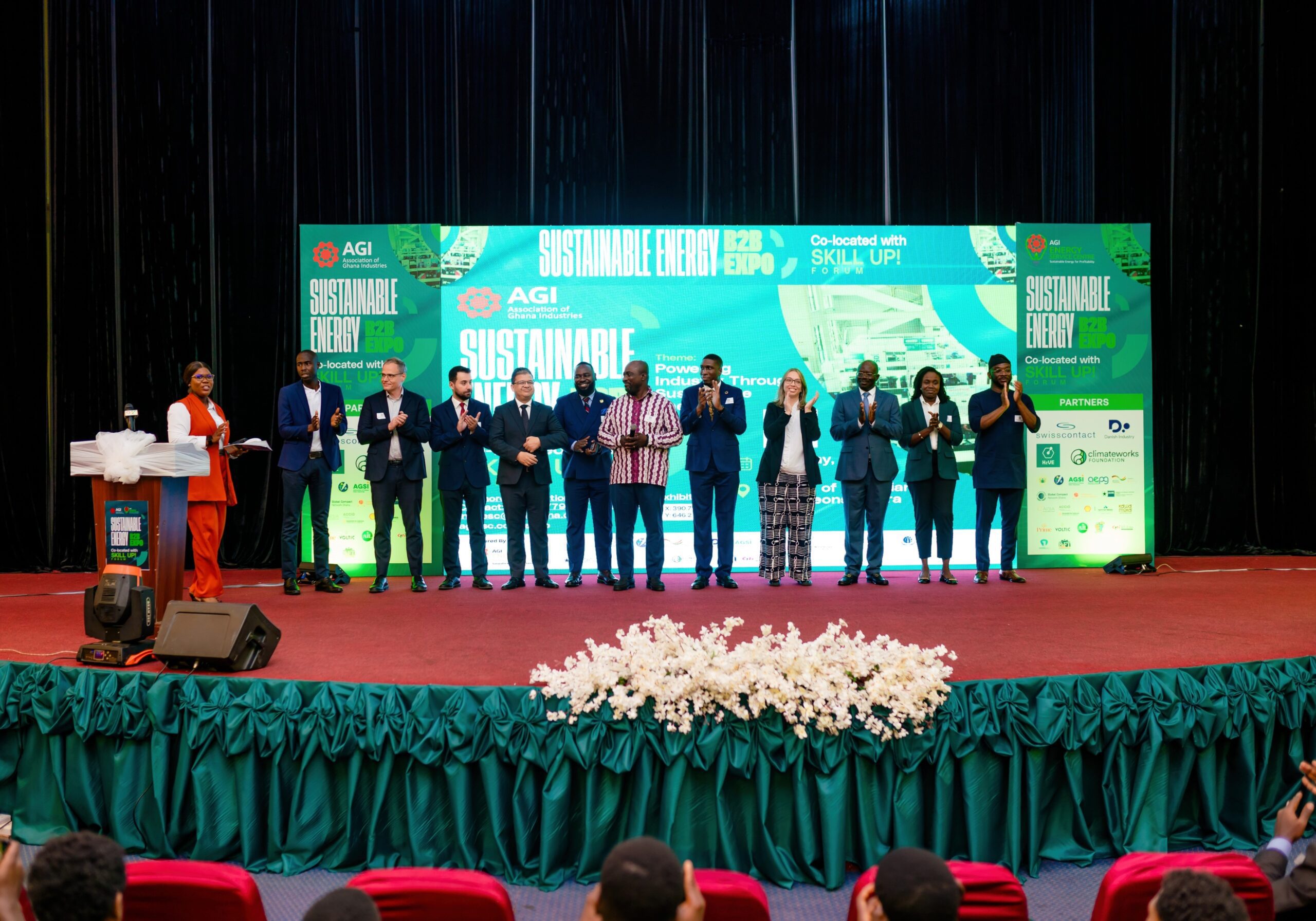

Accra, Ghana – The Executive Director of the United Nations Global Compact Network Ghana, Tolu Kweku Lacroix called on Ghana’s private sector to embrace sustainable energy as a strategic business imperative, emphasizing that the transition to clean energy is essential for industrial competitiveness, resilience, and long-term economic growth.
He made these remarks while addressing participants at the Sustainable Energy B2B Expo 2026, organized by the Association of Ghana Industries (AGI) through its Energy Service Centre under the theme, “Powering Industry Through Sustainable Energy.”
The Expo convened industry leaders, policymakers, development partners, financial institutions, renewable energy experts, and innovators to explore practical solutions for accelerating Ghana’s transition to clean, affordable, and reliable energy for industry.
In his address, Mr. Lacroix commended AGI for creating a platform that places sustainable energy at the centre of Ghana’s industrial transformation, noting that the conversation could not be more timely.
“We can no longer separate economic growth from environmental stewardship,” he said. “Powering industry through sustainable energy is no longer an alternative path; it is the only path to long-term profitability, resilience, and sovereign economic security.”
He observed that while Ghana’s industries must continue expanding production, creating jobs, and strengthening their competitiveness under the African Continental Free Trade Area (AfCFTA), they must also respond to rising energy costs, power reliability challenges, and the growing impacts of climate change on supply chains and production systems.
Highlighting the strong partnership between the UN Global Compact Network Ghana and Association of Ghana Industries, Mr. Lacroix referenced the Memorandum of Understanding (MoU) signed between the two organizations to strengthen collaboration in advancing sustainable, ethical, and responsible business practices across Ghana’s private sector.
As the local network of the world’s largest corporate sustainability initiative, he explained that the UN Global Compact Network Ghana is committed to supporting businesses in embedding the Ten Principles of the UN Global Compact into their operations while accelerating progress towards the Sustainable Development Goals (SDGs).
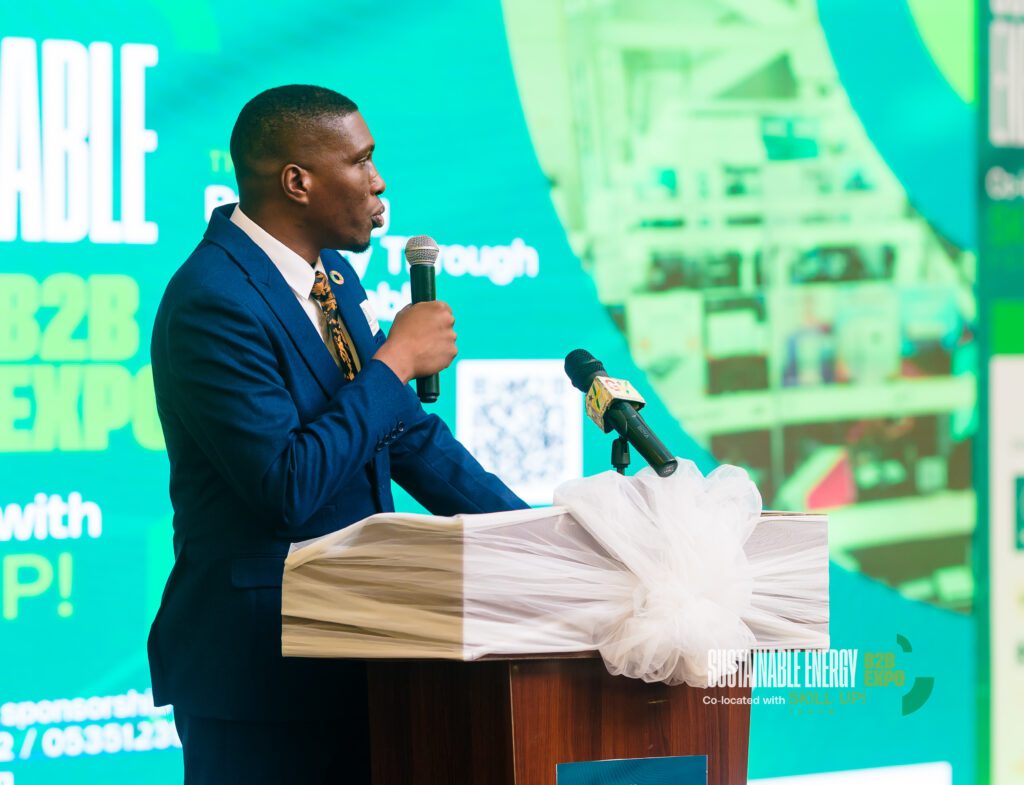
He noted that promoting renewable energy and energy efficiency directly advances SDG 7 (Affordable and Clean Energy) and SDG 13 (Climate Action), while also delivering tangible business benefits.
“By adopting renewable energy, improving energy efficiency, and embracing circular economy practices, businesses can significantly reduce operational costs, mitigate regulatory risks, strengthen resilience, and unlock access to global green financing,” he stated.
Mr. Lacroix further stressed that the green transition requires collective action, underscoring that while government policies provide the enabling environment, it is the private sector that must lead implementation through innovation, investment, and strategic partnerships.
He encouraged business leaders to view sustainable energy not as a future aspiration but as an immediate corporate strategy capable of transforming Ghana’s industrial landscape.
The event featured a keynote address delivered on behalf of the Ministry of Energy and Green Transition by Mr. Seth Mahu, Director of Renewable Energy and Green Transition, who emphasized the need for industries to adopt sustainable energy solutions to remain globally competitive. He reaffirmed government’s commitment to policies that promote renewable energy adoption, energy efficiency, electric mobility, and increased private sector participation in Ghana’s green transition.
In his welcome remarks, AGI President, Mr. Kofi Nsia-Poku, reiterated that sustainable energy has become central to Ghana’s industrial transformation and economic growth. He highlighted the role of the AGI Energy Service Centre in supporting industries with technical guidance, renewable energy integration, and energy efficiency solutions, while calling for stronger policy incentives, affordable financing, and accelerated implementation of the national net metering programme.
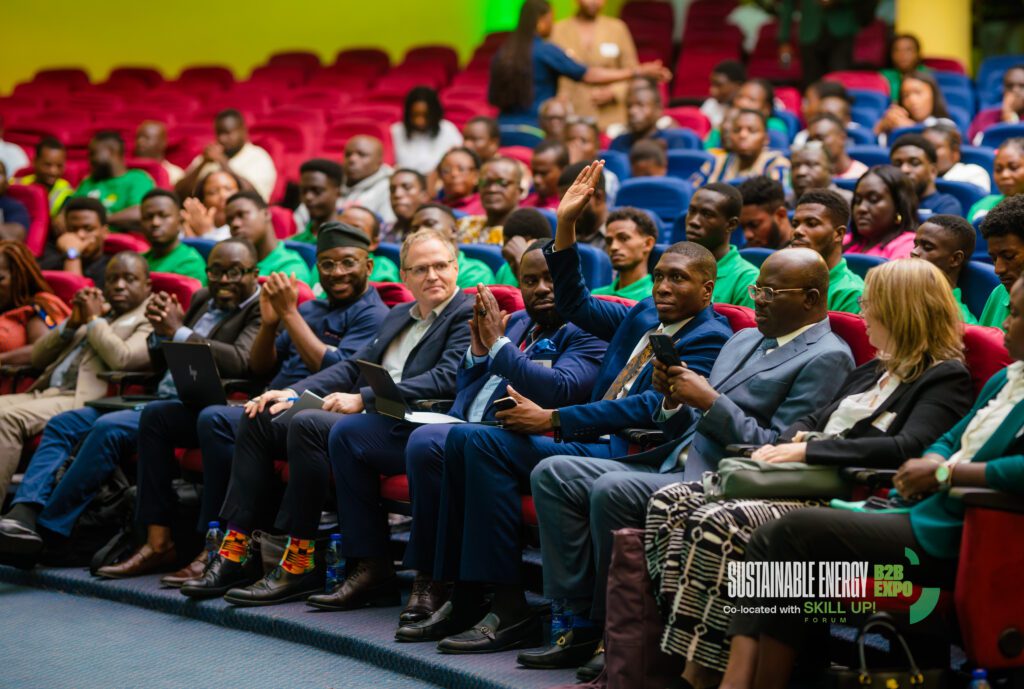
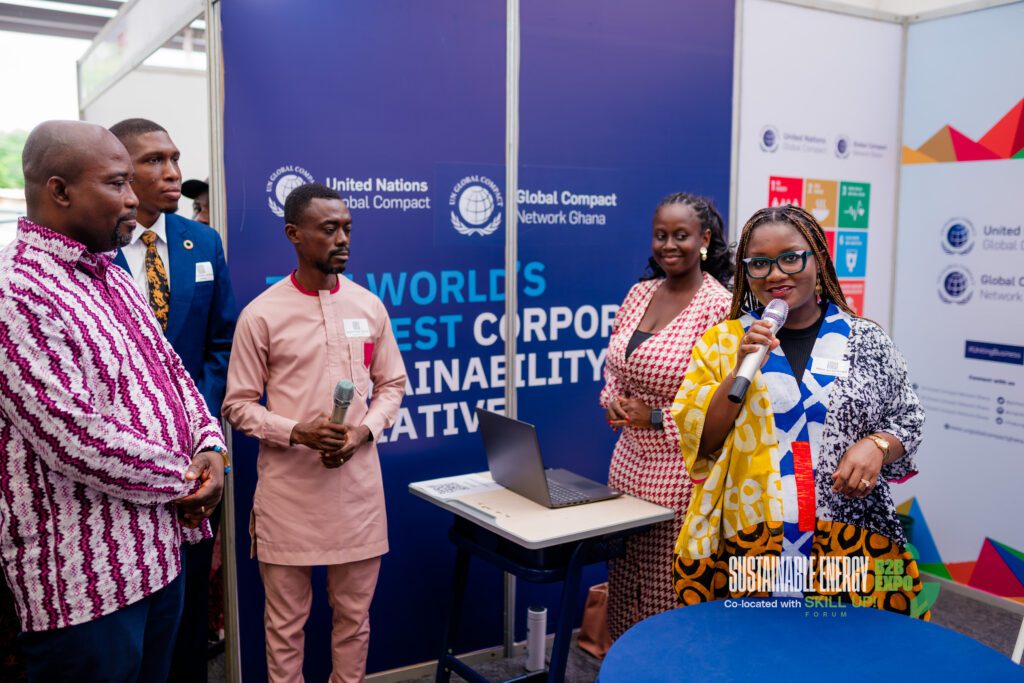
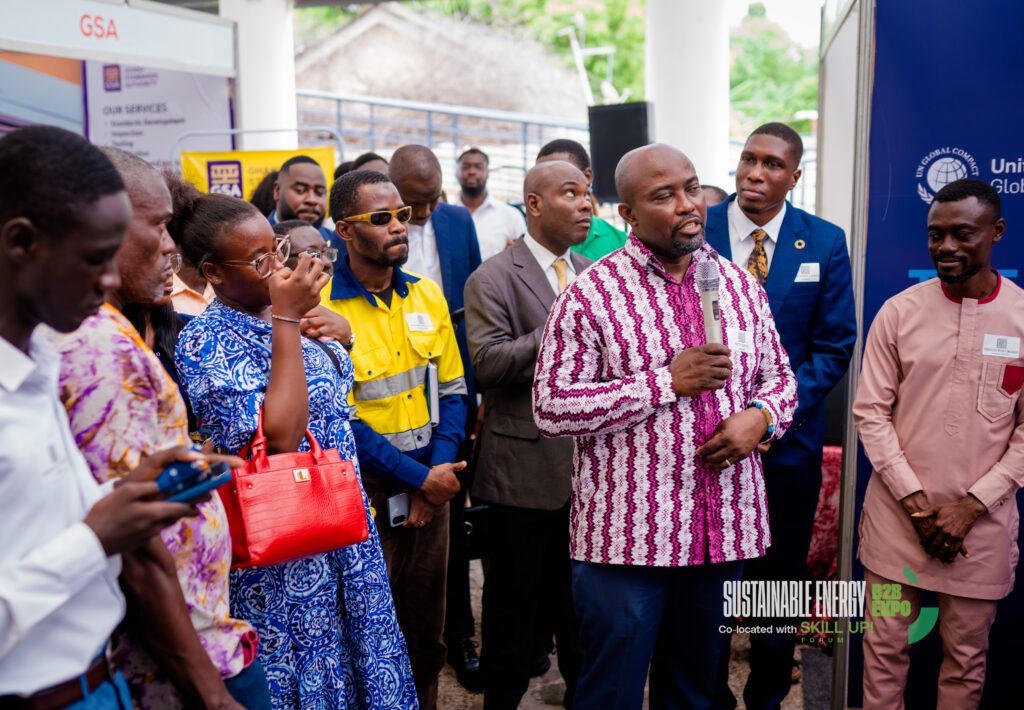
The Expo also featured contributions from representatives of GIZ, Swisscontact, ClimateWorks Foundation, Catalonia Trade & Investment, AHK Ghana, the Energy Commission, and the UN Global Compact Network Ghana, all of whom emphasized the importance of collaboration, innovation, financing, and capacity building in driving Ghana’s sustainable energy future.
Participants engaged in business-to-business networking, exhibitions, innovation think tanks, and solution-focused discussions that connected businesses with sustainable energy providers and investment opportunities. The event also showcased emerging opportunities in solar energy, energy-efficient buildings, electric mobility, climate-smart technologies, and green industrial development.
The UN Global Compact Network Ghana remains committed to working alongside partners such as AGI to accelerate responsible business practices and support Ghana’s transition towards a resilient, low-carbon economy where sustainability drives both business success and national development.
END.