
By Ocean Centres Ghana
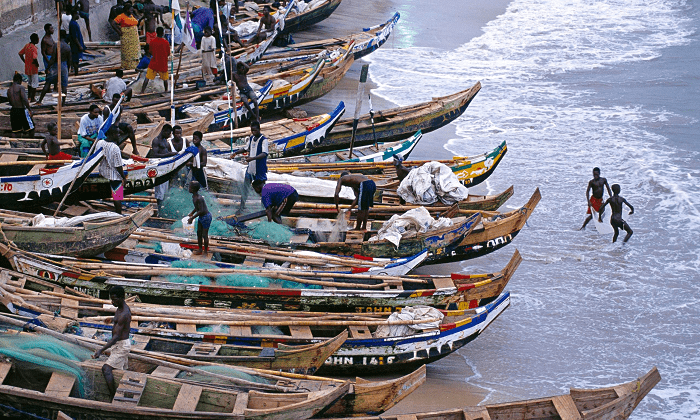
The tragic boat accident near Kete Krachi on 11 October 2025, which claimed sixteen lives including eleven children has once again drawn attention to the silent crisis unfolding on Ghana’s inland waterways. These accidents have become disturbingly familiar, each one carrying the same painful refrain: overloaded canoes, untrained operators, no lifejackets, and little enforcement.
The Volta Lake, Ghana’s largest inland waterway, stretches over 8,500 square kilometres and connects hundreds of communities. For many, boats are not a choice, they are the only means of transport to school, markets, or health facilities. Yet the people who depend on these waters daily face risks that should no longer exist in a country with Ghana’s maritime experience and institutional capacity.
A Pattern That Must Be Broken
Over the past five years, multiple accidents have claimed dozens of lives on the lake. A 2024 Auditor-General’s report revealed ten recorded accidents between 2019 and early 2023, resulting in fourteen deaths, though unreported cases are believed to be higher. Causes remain consistent: overloading, poor vessel condition, bad weather, and in some cases, children operating passenger boats.
Despite the Ghana Maritime Authority’s (GMA) continuing efforts over the years including deploying naval task forces, inspecting crafts, removing submerged tree stumps, and educating communities, safety enforcement across the country’s inland waterways remains inconsistent. Some landing sites are monitored; others are not.
Ghana currently has no publicly available or gazetted Inland Water Safety Code. While the GMA has indicated it developed one a couple of years ago, there is no published version for operators, passengers, or assemblies to reference. This leaves a significant regulatory vacuum. Operators and passengers are guided more by experience than by a binding framework.
What Needs to Change
Safety across all maritime activities including inland waterways, coastal shipping, fishing, and offshore operations must be governed by enforceable rules, consistent inspections, and public accountability. Ocean Centres Ghana believes that the time has come to strengthen and reorganize Ghana’s national approach to maritime safety as a whole, ensuring that every vessel, operator, and operation meets the same high standards of protection and professionalism.
Regulators and enforcement should focus on the following key pillars:
- Vessel Standards and Construction – Ghana must introduce and enforce minimum construction and equipment standards for inland crafts. Passenger vessels/crafts should be built for purpose with visible loadline markings, communication gadgets and emergency equipment.
- Operator Licensing and Competence – Every operator must be trained, tested, and licensed. Age limits should be strictly enforced, and periodic refresher training introduced.
- Mandatory Lifejackets and Passenger Safety – Lifejackets must become non-negotiable. The rule should be simple: No jacket, no journey. Subsidized or community-issued jackets can address affordability concerns.
- Search and Rescue (SAR) Readiness – Ghana needs a coordinated SAR framework for its inland waterways that defines responsibilities for the GMA, Navy, NADMO, and local authorities. Rescue equipment, communication systems, and regular multi-agency drills must be standard practice.
- Community Ownership and Awareness – Sustainable safety depends on people. Local volunteers, assembly members, and traditional leaders must be part of enforcement. Behavioural change campaigns, especially in high-risk areas like Kete Krachi, Dambai, and Yeji, will save lives.
Who Enforces What
The Ghana Maritime Authority is the statutory body responsible for safety on inland waters, including vessel inspection, loadline marking, and licensing. It works with the Naval Task Force and Marine Police to enforce compliance. However, its operational reach and resources remain limited compared to the vast size of the Volta Lake. District assemblies, which oversee local landings and operators, need stronger legal backing and technical support to play an active enforcement role.
Currently, loadlines are enforced primarily by the Naval Task Force and GMA inspectors where they are present, but compliance drops in unmonitored areas. Operator licensing is informal, with some training sessions conducted by GMA, yet there is no clearly structured inland certification regime. Communication and SAR coordination is non-existent and many accidents rely on community rescue efforts.
Drills and exercises are rare. Many landing sites lack even basic rescue tools like life rings, throw lines, or first-aid kits. These gaps must be addressed through a national inland water SAR plan and consistent simulation exercises.
A Call to the Roundtable
To build a coherent policy framework, Ocean Centres Ghana proposes a National Roundtable on Inland Waterway Safety bringing together the Ministry of Transport, GMA, NADMO, the Navy, district assemblies, operators’ associations, traditional authorities, academia, and development partners.
The objective is straightforward:
- Review the current safety regime and identify gaps.
- Draft a comprehensive Inland Water Transport Safety Policy and Regulations.
- Define inspection, certification, and enforcement protocols.
- Develop standard operating procedures for search and rescue.
- Institutionalize regular joint safety drills and community awareness programmes.
This conversation is overdue. Without a harmonized and enforceable framework, tragic accidents will continue to undermine public confidence, trade, and livelihoods across Ghana’s lake and river systems.
Ocean Centres Ghana’s Commitment
Ocean Centres Ghana, hosted by the UN Global Compact Network Ghana and supported by the Lloyd’s Register Foundation, is committed to partnering with the Ghana Maritime Authority and other stakeholders to drive this reform.
Our mission is to integrate safety, sustainability, and capacity building across Ghana’s ocean and inland water systems. We stand ready to support government and industry to:
- Develop model inland water safety guidelines and enforcement templates.
- Train safety inspectors and community responders.
- Pilot “Safe Landing Sites” projects at key transport hubs.
- Support nationwide awareness campaigns for passengers and operators.
- Facilitate data-driven decision-making through a public inland safety dashboard.
A Safer Future Is Possible
The Kete Krachi tragedy must be the turning point that ends complacency. Safety should never depend on luck, but on leadership, law, and learning.
Ghana’s inland waterways can and must be made safe. The tools exist; the partnerships are within reach. What is required now is the collective will to act.
Ocean Centres Ghana stands ready to work with every stakeholder to chart a safer course for every passenger, every community, and every life that depends on our waters.
Because no one should die trying to get home.
END.