
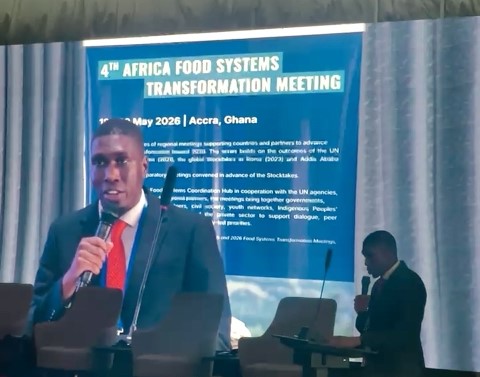
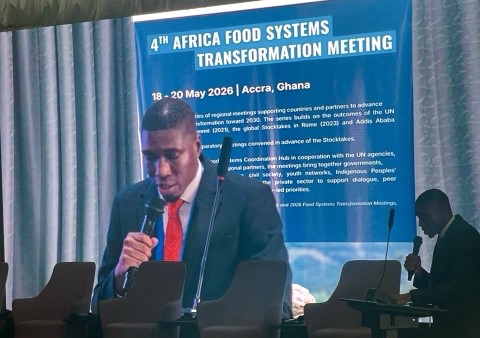
“Policy ambition alone is not enough. Across Africa, and particularly here in Ghana, our food systems remain central to economic resilience, livelihoods, and social stability. Yet, rising food inflation, heavy supply chain inefficiencies, and severe climate vulnerabilities continue to disrupt the foundations of our food security.”
These were the opening words from our Executive Director, Mr. Tolu Lacroix, today at the 4th Africa Regional Food Systems Transformation Meeting. Speaking during the roundtable session on How the Private Sector Can Support Food Systems Transformation, our Executive Director challenged stakeholders to start positioning the private sector as the core architects of transformation.
Key Takeaways from the Opening Remarks:
- The Reality Check: He noted that despite employing a massive share of our population, African agriculture is continually undermined by post-harvest losses, limited irrigation, and constrained access to finance.
- Blended Finance is a Necessity: Commercial capital cannot carry this risk alone, and donor-aid dependency is unsustainable. He highlighted the importance of scaling up blended and catalytic finance tools to de-risk investments and make local agricultural enterprises commercially viable and investment-ready.
- Experience-Based Dialogue: He highlighted how true transformation happens when policy conditions align with operational realities on the ground. We need to continuously ask agri-tech innovators, smallholder-linked SMEs, and commercial banks: What institutional barriers are constraining your growth?
This milestone regional dialogue follows directly in the footsteps of our landmark UN Global Compact Ghana Sustainable Food Systems Summit organized in collaboration with the United Nations Ghana and local partners.
At our summit, the shocking reality of Ghana’s $3 billion annual food import bill and 30% post-harvest loss rate took center stage. The summit outlined three non-negotiable pillars for localized action:
- Policy Alignment: Embedding strict nutrition and food security indicators directly into national frameworks.
- Financing and Innovation: Designing predictable and inclusive cross-sector funding mechanisms to shield farmers from shocks.
- Value Chain Transformation: Strategically empowering smallholder-linked SMEs, women, and youth to enhance local food production and security.
As the world’s largest corporate sustainability initiative, the UN Global Compact Network Ghana is moving this agenda from conversation to corporate implementation. Through our platform, we are bringing agribusiness leaders, financial institutions, and policymakers into structured action tracks. We are actively helping agri-focused companies integrate the Food and Agriculture Business Principles into their core business strategies to end hunger, optimize value chains, and establish sustainable practices that protect both people and the planet.
The message from today is clear: we must move past fragmented plans. We must collectively build agricultural systems that are self-sufficient, resilient, and distinctively African.
END.